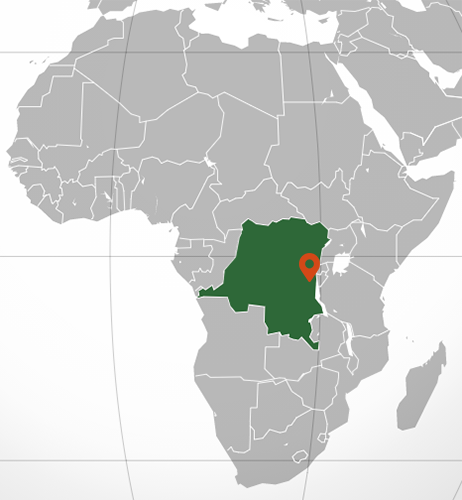
A New York Times op-ed (Aug. 7, 2011), How Congress Devastated Congo, offers a blistering critique of the conflict minerals plank of the Dodd-Frank Act. Though the act hasn’t been implemented, the author argues that a pre-emptive minerals ban is having the unintended consequence of putting artisan miners in Eastern Congo out of work.
The Enough Project, a leading driver in the conflict minerals campaign and this piece of legislation, has vigorously defended the provision. So have some other organizations close to the situation. Congo expert Jason Stearns also pointed out in a blog post last week, “Thoughts about Conflict Minerals,” that some Congolese NGOs had supported implementation of the act as recent as May 2011.
I would like to make the point that in this debate it’s time to listen more carefully to what the Congolese have had to say all along about the ongoing, destructive conflict in their country. From numerous conversations with Congolese friends, and the blogs of Congolese activists, their message seems to be consistent.
While supportive of cleaning up the minerals trade in the East, they continue to indicate that the effort to do so by the Dodd-Frank bill and the campaign to purchase “conflict free” cell phones doesn’t get to the heart of the matter.
Listen carefully here to what some insightful Congolese voices have to say about the broader context of the conflict in their country.
“The conflict mineral approach has an obsessive focus on the FDLR and other rebel groups while scant attention is paid to Uganda (which has an International Court of Justice ruling against it for looting and crimes against humanity in the Congo) and Rwanda (whose role in the perpetuation of the conflict and looting of Congo is well documented by UN reports and international arrest warrants for its top officials),” wrote Kambale Musavuli and Bodia Macharia, representatives of Friends of the Congo in a 2009 Huffington Post blog. “Rwanda is the main transit point for illicit minerals coming from the Congo irrespective of the rebel group (FDLR, CNDP or others) transporting the minerals.”
My friend Agnes Loteta Dimandja, another voice from the Congolese diaspora, points out:
“The Congolese situation remains complex to understand because there are too many hidden interests. It is clear that some active organizations supposedly working for the Congolese interests, yet act contrary to these interests. This is understandable because of their hidden agenda. It is known that behind the so-called humanism hides large financial and economic interests they cover and for which actually they work.
“Despite many reports that have clearly denounced the responsibility of both countries Rwanda and Uganda, they have never been condemned. It is known that the two presidents are responsible of the tragic situation in Congo for over 10 years. They have built mineral processing plants in their countries and it is in full sight of everyone that each day, truckloads cross the Congo border carrying Congolese minerals to these countries.”
These Congolese voices are not uncritical of the DRC government’s role in the conflict.
Mvemba Dizolele, a Congolese scholar and writer, points out on his blog that the DRC government has failed to build a professional army, “perhaps the single most important element in ensuring Congo’s territorial integrity and the security of its citizens and coveted national resources. President Kabila continues to deal with militias in the east in the same way that he did during the transition period—co-opting warlords into the government and security institutions. Even as militia leaders get promoted into the Congolese army, they remain rooted geographically in their area of influence and continue to perpetrate horrific abuses on civilians with impunity. In short, the national army is little more than a patchwork of militias with parallel command structures and no incentive to change.”
At the same time, Dizolele underscores the destructive role of Rwanda, Uganda and other neighboring countries in the Congo.
“The predatory designs of neighboring Rwanda and Uganda also fuel the volatile situation,” he writes. “Both Rwanda and Uganda have invaded Congo twice, with continued incursions into eastern Congo where they still support militias. Several UN reports have linked both countries to Congolese militias and the looting of resources. Furthermore, Uganda, Rwanda, Burundi and Tanzania benefit from the illicit mineral trade in eastern Congo as they serve as primary export routes. And while Uganda, Rwanda and Burundi have no gold, diamond or tantalum deposits of significance, they have become important exporters of these minerals. In the past, high level government officials and senior army officers were implicated in this trade. Whether this is still the case today is unclear. It seems, nevertheless, highly unlikely that these countries could export such large amounts of minerals without the collusion of government officials. Whether these leaders are actively sourcing these goods or simply turning a blind eye to the trade matters little to the bottom line: the result is still the same.”
So given the debate over the efficacy of the conflict minerals campaign, my question for the campaign proponents is this: While leading Congolese voices continue to point to the regional nature of the minerals trade as the the main problem, why don’t you address it? In asking the U.S. public to focus on “conflict minerals” are you not providing cover for a not too hidden regional problem involving Rwanda, Uganda and other neighboring countries of the Congo? Why not put more emphasis in a regional diplomatic solution, for example calling on the Obama administration, or perhaps the UN, to appoint a special envoy to the region? Such a mission would seek a resolution of the conflict with the major players, not only President Kabila of the DRC, but also President Museveni of Uganda, and President Kagame of Rwanda.
Such a mission would also do well to involve the International Criminal Court in further indictments on militia leaders and to uncover and to bring to justice their supporters. Restorative justice for the Congolese, who have suffered untold violence, is also essential in any rebuilding process.
TF Austin